A Delta Air Lines flight scheduled to depart from Orlando to Atlanta was forced into an emergency evacuation on Monday after one of its engines caught fire shortly after pushback, triggering alarm among passengers and aviation authorities alike.
The Airbus A330, operating as Delta Flight 1213, had just left the gate at Orlando International Airport (MCO) around 11:06 a.m. when a burst of flames was seen shooting from its right-side engine tailpipe. Onboard were 282 passengers, 10 cabin crew, and two pilots.
Footage captured from inside the terminal by passenger Dylan Wallace shows an intense blaze flaring from the aircraft’s rear engine casing, prompting immediate intervention from ground staff and emergency responders.
“We’re calling fire trucks now!” — audio from air traffic control captured by Broadcastify
Emergency slides were deployed within seconds. According to multiple passenger accounts, the evacuation was swift — taking “less than 10 seconds” for many to exit via the inflatable chutes. Some described it as “the most terrifying 10 seconds of my life.”
“A textbook evacuation”
Delta Air Lines issued a statement Monday afternoon, confirming that the evacuation was conducted “in accordance with safety protocols,” and that all passengers were safely returned to the terminal. “There were no injuries reported. We sincerely apologise to our customers for the experience,” the airline said.
The airline added that replacement flights would be arranged for affected passengers, with food and refreshments provided during the wait. The airline’s technical teams have launched a full inspection of the aircraft, and the cause of the fire remains under investigation.
Orlando International Airport confirmed that its emergency response was activated immediately. “The fire has been extinguished and the aircraft secured,” the airport said in a brief update. “A portion of the passengers evacuated via emergency slides as per protocol.”
Social media reaction: safety and politics collide
The incident quickly spread on social media, with the video of flames erupting from the engine receiving tens of thousands of views within hours. While many users praised the crew’s professionalism and calm response, others raised concerns about aviation maintenance standards and the rising frequency of aviation incidents in the United States.
Some comments blamed corporate cost-cutting for maintenance failures, while others drew political inferences:
“Funny how all these aircraft incidents started after Trump slashed the FAA budget and axed safety personnel.” “Delta’s engine fire has nothing to do with air traffic control. It’s about maintenance, not radar.”
The FAA (Federal Aviation Administration) declined to comment on the political remarks but confirmed they are monitoring the incident closely and will participate in the technical review.
An unsettling trend?
The Orlando fire is the latest in a string of alarming aviation incidents in the US. Over the past two weeks alone, at least five fatal crashes involving smaller aircraft have been reported:
April 18: A private aircraft with three passengers crashed into the Platte River in Nebraska. All were killed.
April 19: Another small plane struck a high-voltage power line in Illinois and crashed into farmland. Four dead.
April 10: A sightseeing helicopter in New York’s Hudson River went down, killing a family of five and the pilot.
April 11 & 12: Two more light aircraft crashes in Florida and upstate New York claimed nine more lives.
According to NTSB data, the U.S. averages around 1,200 aviation incidents annually — about four per day — though the vast majority involve private or chartered aircraft. However, the public’s perception of airline safety is becoming increasingly fragile.
What caused the engine fire?
Aviation experts suggest the visible flames may have resulted from a fuel or oil leak igniting within the tailpipe — a potentially dangerous but not necessarily catastrophic failure if caught early.
Dr. Jonathan Morley, an aviation safety analyst, told BBC: “Tailpipe fires, while dramatic to look at, are not uncommon. What matters most is the response time. In this case, the evacuation was fast, orderly, and effective. That’s the real story.”
Delta Airlines, one of the “Big Three” U.S. carriers, has generally maintained a strong safety record. Nonetheless, Monday’s incident is expected to fuel calls for more transparency around maintenance protocols and safety inspections, particularly as airlines ramp up operations post-COVID.
As for the 282 passengers, they’ve been promised a replacement flight to Atlanta. But many say their next trip through the skies may come with a moment’s pause — and a glance at the engines.
QUEBEC BORDER — A woman and two young children have gone missing in the dense woods straddling the Canada–U.S. border, triggering a full-scale search-and-rescue operation by Quebec provincial police and the Royal Canadian Mounted Police (RCMP).
They were last seen near Godmanchester, a rural town 65 kilometers southwest of Montreal, attempting to cross illegally into Canada.
Three others — two men and one woman — were apprehended late Wednesday night in the same area. According to RCMP spokesperson Sgt. Martina Pilarova, the detained individuals told officers their companions became separated in the forest during the crossing.
The group was fleeing the United States. All of them are transgender or non-binary.
A Flight for Identity
Their stories reflect a surge in border activity unseen since the early Trump era.
Since President Donald Trump’s return to the White House, the administration has dismantled protections for gender-diverse Americans, revoking the “X” gender option on federal IDs, restricting trans participation in the military and sports, and rescinding diversity and inclusion mandates across agencies.
That rollback has had real consequences.
“We never thought we’d have to leave the country,” said Salem Took, a trans resident of Maine. “But I don’t feel safe anymore. Not legally. Not physically. Not emotionally.”
Took and their partner are now considering selling their home, uprooting their children, and moving to New Brunswick.
They’re not alone.
The New Exodus: Americans at the Gates
According to the Canada Border Services Agency (CBSA), 557 asylum seekers — a record number — entered Quebec between April 1 and 6. That’s nearly equal to the entire total for January.
While many came from crisis-hit nations like Haiti and Venezuela, a striking number were American citizens, primarily LGBTQ+ individuals citing persecution under new U.S. federal policy.
In February and March alone, CBSA processed 755 and 1,356 asylum applications respectively at the Saint-Bernard-de-Lacolle crossing — a nearly 300% year-on-year increase.
And the number is still climbing.
“We are experiencing an unprecedented surge,” said a CBSA spokesperson in a statement Thursday. “Our contingency plans include temporary intake centers, staff redeployment, and coordination with provincial health services.”
Processing centers are now operating near border towns and in emergency shelters. Mobile courtrooms are being prepared.
Can a Canadian Visa Offer Safety from a Superpower?
Under current law, U.S. citizens may apply for asylum in Canada if they remain inside the country for 14 days. Immigration lawyers say they’re seeing a flood of consultations from American clients — especially transgender people — asking if political conditions back home could qualify as grounds for protection.
“There’s a real case to be made,” said immigration attorney Yamina Ansari. “If individuals can demonstrate that their identity puts them at risk of systemic harm, even in a country like the U.S., then Canadian asylum law has room for them.”
Calls are growing for fast-track exceptions for U.S.-based LGBTQ+ claimants.
But the legal process is complex, and Canada’s Immigration and Refugee Board (IRB) is already overwhelmed. Delays are stretching from months to years.
“Join Canada, Eh?”: When Satire Mirrors Reality
The growing migration wave has sparked both concern and mockery online. A parody website titled “Join Canada, Eh?” has gone viral, allowing Americans to “vote” which U.S. state should join Canada as its “11th province.”
Over one million people have cast votes. Leading the pack? Michigan, followed by Oregon, Vermont, and Maine.
“It’s satire,” said creator Corey Ross of Starvox Entertainment, “but it’s also how people process despair — with humor.”
Border Towns Overwhelmed — and Divided
In real terms, the influx is stretching the seams of Canadian border towns.
In Saint Andrews, New Brunswick, town officials report a sharp rise in asylum inquiries — particularly from American families. Locals are supportive, but anxious.
“We want to help,” said town councilor Linda M., “but we’re at capacity. We’re talking about housing, clinics, schools. Everything’s tight.”
Social media backlash has been swift. Hashtags like #CanadaIsFull and #SecureTheBorder are trending. Some users are demanding tighter controls.
“We can’t fix America’s problems,” wrote one Twitter user. “We can barely afford groceries ourselves.”
What’s Next?
With tensions rising and the border heating up, Canadian federal authorities have yet to announce a definitive stance on how to handle the growing number of U.S. claimants — especially those with no criminal history but complex identity-based claims.
Meanwhile, the missing woman and her two children remain unaccounted for as of Friday morning. Search crews are expanding their perimeter.
This is no longer a fringe issue. It’s a continental crisis unfolding in real time.
And for thousands of Americans, Canada is no longer just a neighbor — it’s an escape plan.
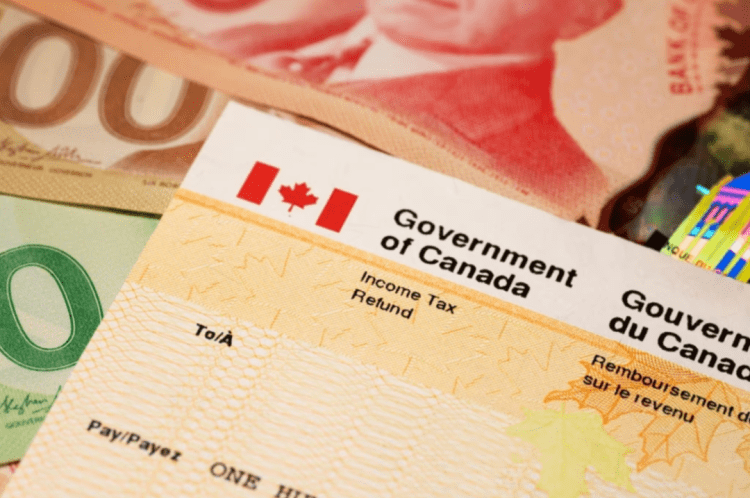
As Canada enters the final stretch of the tax season in mid-April, a widely discussed tax report has been released, revealing that hundreds of thousands of Canadians are unknowingly missing out on tax rebates and benefits. On average, each individual loses $3,000 annually, with a total of $3 billion being “given away” to the government each year.
This enormous “lost wealth” is largely attributed to the public’s general lack of understanding of tax policies, the complex design of the tax system, and the exclusion of certain social groups due to language and cultural barriers. While many people still have time to “reclaim” the money that rightfully belongs to them, they must first realize that these benefits are a right, not a favor.
Blind Spot 1: 65% of Canadians Don’t Know Tax Forms Can Be “Amended”
According to a national survey conducted by H&R Block this month, 65% of Canadians were unaware that they could amend their personal income tax returns for the past 10 years to claim missed deductions, tax credits, or benefits that they were entitled to but did not previously claim.
“The most shocking finding in our survey wasn’t what people missed; it was that they didn’t know they could make amendments,” said Yannick Lemay, a senior tax expert at H&R Block. “Many people still believe that once the tax filing deadline has passed, they can no longer make changes, which is completely wrong.”
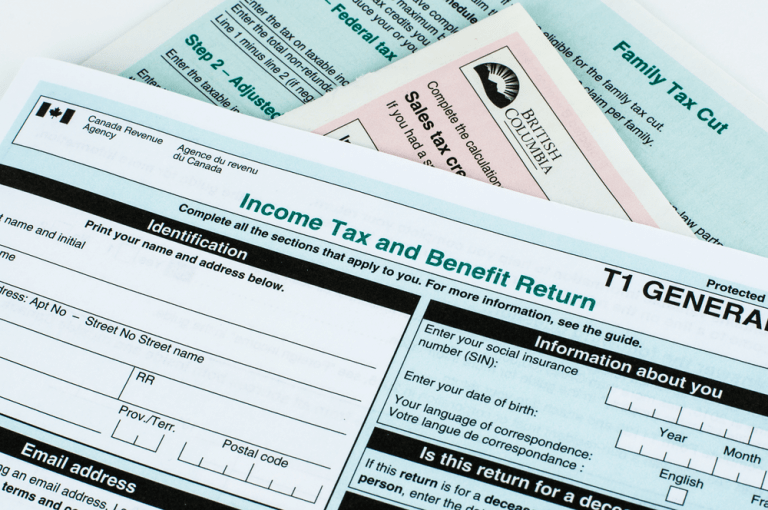
According to the Canada Revenue Agency (CRA), individual taxpayers can use the T1 Adjustment Request (T1-ADJ) form to correct tax returns from up to 10 years ago, especially for missed tax credits, medical expenses, education costs, or family care expenditures.
Blind Spot 2: 72% of People “Don’t Bother to Amend” – Is It the Complexity of the System or Information Gap?
The report also highlighted that while some people are aware they can amend their tax returns, 72% of respondents stated they believed that amending old tax returns was “too much trouble,” and therefore chose to forgo potential benefits and rebates.
This has sparked further criticism of the CRA’s service system from both academics and tax professionals.
“It’s not just an issue of ‘not knowing,’ but a lack of trust in the entire tax system,” said Elena Jiang, an associate professor of public policy at UBC. “The government’s intention behind these tax credits was ‘social redistribution,’ but in reality, they have become opportunities that only the ‘information elite’ know how to take advantage of.”
According to Jiang, information gaps, tax burdens, and language and cultural barriers are key factors preventing low-income groups, immigrants, and younger people from claiming these benefits.
“You first have to know that the benefit exists, then know that you qualify, then know how to fill it out, and you also need to know that you can amend it… It’s a system with a very high information threshold,” she said.
Real-World Impact: Losing $3,000 – “This Could Have Helped Me Pay My Credit Card Bill Last Month”
“I was shocked,” said Lily Wang, a full-time mom from Toronto, in an interview. “I always thought the student loan interest credit was just a small number, but I had no idea that I could claim the interest I paid over the past five years, and even get a refund of a few hundred dollars.”
Wang had used H&R Block’s Second Look service at the recommendation of a friend and discovered that she could claim multiple expenses, including after-school psychological counseling and orthodontic treatment for her children, under medical expense tax credits (METC).
“I used to think filing taxes was just filling out software, and maybe I’d get a few hundred dollars back in GST/HST refunds. Now I realize, we’ve been ‘automatically waiving our rights’ this whole time,” she said.
Experts’ Overview: Top 10 Most Commonly Missed Tax Benefits in Canada – How Many Have You Missed?
H&R Block has compiled a list of the top 10 most commonly overlooked tax credits and deductions, many of which can be claimed retroactively through CRA amendments:
Benefit
Description
Amount Refundable/Claimable
Childcare Expenses Credit
Up to $8,000 for children under 7
Up to $8,000 per child
Canada Workers Benefit (CWB)
Tax credit for low-income workers
$1,590 for single, $2,739 for families
Student Loan Interest Credit
Claim interest paid on student loans for the past 5 years
Based on actual interest paid
Medical Expense Tax Credit (METC)
Dental, orthodontic, mental health costs, etc.
No limit, 15% of eligible expenses
Moving Expenses Deduction
Moving 40+ km for work or study
Includes temporary accommodation, real estate fees, etc.
Home Accessibility Tax Credit (HATC)
Modifications for seniors or people with disabilities
Up to $3,000
Disability Tax Credit (DTC)
Applies to conditions like ADHD, diabetes, etc.
Up to $9,872, depending on the case
Tuition Tax Credit
Transferable or cumulative indefinitely
Up to $5,000 per year transferable
First-Time Homebuyers’ Tax Credit (HBTC)
Tax rebate for first-time homebuyers
Up to $1,500
Caregiver Credit (CCC)
For those caring for elderly or disabled family members
Up to $8,375
It’s important to note that many people mistakenly believe they don’t qualify for credits like the CWB or DTC because they “don’t earn enough.” However, these credits are not limited to low-income individuals.
“The most common misunderstanding we encounter is: ‘I don’t receive government benefits, so these credits don’t apply to me,’” Lemay explained. “In reality, as long as you have a job, children, family members, or loans, you may qualify for these credits.”
Language and Class Barriers: Information Inequality Creates “Financial Inequality”
An elderly immigrant from the Greater Vancouver area shared, “We used to rely on our son’s friend to help us with the tax filing, and no one ever told me that these credits were available.”
In her view, language barriers, lack of professional knowledge, and even a lack of trust in the government system have led many immigrant families to miss out on the support resources that rightfully belong to them.
Data shows that new immigrants and non-native English speakers are significantly more likely to make errors, omissions, or miss out on benefits compared to the general population.
“This isn’t about laziness; it’s that the system doesn’t take them into account,” said Professor Elena Jiang. “A truly fair tax system cannot only benefit the ‘information elite.’”
Still Time to Reclaim Missed Benefits: How to Apply for Retroactive Refunds
The CRA currently allows individuals to apply for retroactive credits or refunds using the following steps:
Log into your CRA account and download/fill out the T1-ADJ form
Specify the years and credits you wish to amend
Attach supporting documents (e.g., receipts, medical bills, loan interest details)
Choose to submit by mail or electronically
Wait for CRA’s processing (typically several weeks to months)
Many tax services (such as H&R Block and TurboTax) also offer “historical review” services to help users reclaim misreported items from previous years.
Conclusion: The Government Won’t Tell You What You’re Entitled To
“You’re not missing out on benefits, you’re missing out on opportunities—the portion of your earnings that should rightfully be yours,” commented one Twitter user.
In the current climate of high inflation, rising living costs, and high interest rates in Canada, every refundable dollar is like “lifesaving water” for household finances.
If we’ve missed out in the past due to ignorance, negligence, or lack of time, it may be time to reassess our relationship with “taxes.” They’re not just cold government forms—they’re maps that hold the potential to unlock your wealth.
OTTAWA — Mark Carney knew the comparison was inevitable. On stage at Canada’s first televised federal leaders’ debate, the former central banker-turned-political leader faced a direct attack from Conservative leader Pierre Poilievre: “Mr. Carney, your party has been in power for 10 years. You are like Trudeau. We need change.”
Carney responded swiftly, “You’re not Trudeau. I’m not Trudeau.” It was a calculated departure from the legacy of Prime Minister Justin Trudeau, under whom Carney once served as an informal economic adviser. Now, as leader of a Liberal Party seeking a fourth consecutive term, Carney must convince voters he represents continuity in experience—but a break from leadership fatigue.
A Technocrat’s Gamble
Mr. Carney, 59, comes to the campaign with a résumé few in Canadian politics can match. A former governor of both the Bank of Canada and the Bank of England, he has also served as UN Special Envoy on Climate Action and Finance. His entry into politics was long anticipated, but his timing presents both opportunities and constraints.
Facing a resurgent Conservative Party under Mr. Poilievre, who has capitalized on cost-of-living pressures and a growing skepticism toward federal institutions, Mr. Carney’s brand of calm technocratic leadership is being positioned as a stabilizing force amid rising global volatility.
But the perception that he is a policy architect behind the Liberal Party’s record—marked by ballooning deficits, high immigration targets, and an underperforming housing market—poses political risks.
“Carney represents a very different tone and policy orientation than Trudeau,” said Jennifer Welsh, a political science professor at McGill University. “But it’s not yet clear that voters will distinguish him from the broader Liberal record.”
A Decade in Power, and the Weight That Comes With It
Since 2015, the Liberal Party has overseen expansive social spending programs, a carbon pricing regime, and a foreign policy often aligned with multilateralism. The government also weathered a global pandemic and subsequent inflationary surge, both of which have tested its credibility with middle-class voters.
Public support has eroded in recent years. According to an Ipsos poll conducted earlier this month, 47% of respondents said it is time for a new party to govern, while only 28% expressed confidence in the Liberals’ ability to manage the economy.
In response, Mr. Carney has unveiled a platform focusing on what he calls “pragmatic growth”—a mix of green energy investment, targeted tax reform, and aggressive housing supply measures aimed at restoring affordability.
“I am not running on the past. I am running to build a resilient future,” Carney said during the debate, seeking to underline his economic credentials without defending every decision of the Trudeau years.
Conservatives Lean Into “Change” Message
Mr. Poilievre, for his part, has leaned heavily into the “time for change” narrative. In the debate, he attacked the Liberals on inflation, immigration policy, and public debt—topics where Carney’s prior roles make him both highly knowledgeable and politically vulnerable.
“Poilievre is betting that Carney can’t escape the Liberal shadow,” said Darrell Bricker, CEO of Ipsos Public Affairs. “Whether that’s fair or not is beside the point. What matters is whether voters believe in the distinction.”
Still, Mr. Carney’s “I’m not Trudeau” remark may prove pivotal. For some Liberal voters wary of a fourth Trudeau term but hesitant to back Poilievre, it offers a psychological off-ramp—an option to stay the course, with new leadership.
Markets Watching Closely
Bay Street and international investors are closely monitoring Carney’s performance. His global economic reputation lends credibility, especially in the eyes of institutional players concerned with Canada’s fiscal discipline and regulatory stability. But political capital, like market confidence, is easy to lose and hard to earn back.
The next leaders’ debate is expected in two weeks, where economic policy is again set to dominate. Until then, Mr. Carney’s balancing act—between insider and reformer, continuity and change—remains the defining tension of a high-stakes campaign.





 加拿大家园论坛