Category Archives: economy

From Orange Juice to Canned Tomatoes: 6,900 Canadian Grocery Stores Quietly Raise Prices as Trade War Costs Hit the Shelves

From Orange Juice to Canned Tomatoes: 6,900 Canadian Grocery Stores Quietly Raise Prices as Trade War Costs Hit the Shelves

A quiet “storm at the dinner table” is sweeping across Canada, reshaping the way people shop. From orange juice to canned tomatoes, price tags are shifting—and behind these changes lies more than just inflation. It’s the ripple effect of an international trade war, with hidden tariff costs creeping down the supply chain and landing in Canadians’ grocery carts.

According to the Canadian Federation of Independent Grocers (CFIG), nearly all of the country’s approximately 6,900 independent grocery stores have begun raising prices to varying degrees—especially on fresh foods. Gary Sands, Senior Vice President at CFIG, said these small businesses already operate on razor-thin margins—about 2%—leaving little room to absorb rising costs.

“This isn’t a choice for retailers, it’s a matter of survival,” Sands said. “When food manufacturers raise prices by 4%, 5%, 6%, or even double digits, we simply have no choice but to pass those costs on to consumers.”

The Hidden Tariff in a Glass of Orange Juice

Orange juice, a staple in many Canadian homes, offers a striking example of how tariffs are playing out in real time. On Loblaws’ website, price differences between local and imported products are stark:

  • Canadian-made President’s Choice pulp-free orange juice: $5.00 (32¢ per 100ml)
  • U.S.-made Tropicana (marked “tariff-affected”): $8.72 (66¢ per 100ml)
  • Canadian Simply Orange: $7.69 (50¢ per 100ml)

At Metro, the trend is similar:

  • Canadian Irresistibles orange juice (2.5L): $6.99 (28¢ per 100ml)
  • U.S. Tropicana (2.5L): $13.99 (53¢ per 100ml)

This isn’t just about brand preference—it’s a direct consequence of tariffs levied on U.S. imports. Stuart Smyth, professor of agricultural and resource economics at the University of Saskatchewan, explains that policy volatility since February has caused pricing uncertainty, prompting producers to factor in worst-case tariff scenarios ahead of time.

Canadian-Made Doesn’t Mean Cost-Free

Surprisingly, domestic food manufacturers aren’t spared either. Michael Graydon, CEO of the Food, Health & Consumer Products of Canada (FHCP), revealed that many Canadian producers still rely on U.S. ingredients. One Ontario cannery, for instance, sources tomatoes from California—now subject to retaliatory tariffs since March.

“Coffee, chocolate, nuts—all key ingredients in Canadian food production—are also on the tariff list,” Graydon said. “Most producers are still trying to absorb these costs themselves, hoping things stabilize soon. But no one knows how long they can hold out.”

Price increases are not always immediate. When suppliers want to raise prices, they must file formal requests with retailers, justifying the need. The process can take 6 to 12 weeks, meaning the full impact of cost increases hasn’t yet appeared on store shelves.


Canada’s Cheapest Grocery Chains Revealed

Faced with rising prices, consumers are adapting. A recent Narcity poll on Facebook asked Canadians to name their go-to budget grocery chains. Surprisingly, bulk-buying giant Costco didn’t make the top three. Instead, Canadians chose:

  1. No Frills
  2. Food Basics
  3. Giant Tiger

Giant Tiger, in particular, is being hailed as a rising star. “It keeps getting better,” one user commented. Others said Costco is great for large families, but not always ideal for singles or small households—where bulk buying can backfire financially.

Other honorable mentions include FreshCo, Walmart, and Dollarama. “Aside from meat, dairy, and produce, you can buy almost everything at Dollarama,” said one Ontario shopper.

Additional budget-friendly stores, though less frequently mentioned, include Real Canadian Superstore, T&T Supermarket, Farm Boy, and Save On Foods. Loblaws also drew praise for offering aggressive discounts from time to time.

The consensus? No one store is cheapest across the board. Smart shopping means hopping between chains and keeping an eye on promotions.

A New Era of “Shelf Sovereignty”

Beyond price tags, there’s a deeper consumer shift underway. Sands says more and more Canadians are actively seeking out “Made in Canada” products. Retailers who previously stocked heavy inventories of U.S. goods are now struggling—unable to sell at profitable prices.

“Consumers are speaking with their feet,” Sands noted. “I’ve been in this industry for 25 years, and I’ve never seen this level of demand for Canadian-made goods.”

There is one bright spot: with warmer weather arriving, locally grown Canadian fruits and vegetables are entering peak season. These products avoid both tariffs and long supply chains, offering relief to shoppers looking for fresh, affordable options.

“No one likes higher prices, but we have to shop smarter,” said one Toronto resident. In a trade war with no clear end in sight, the grocery aisle has become the front line—and Canadians are learning to navigate it with both caution and creativity.

Tax Cuts or Home Dreams? Canada’s Election War Pits Wallet Relief Against Long-Term Housing Fix

Montreal Debate Signals Stark Fiscal Divide as Trudeau Liberals and Poilievre’s Conservatives Face Off Over Who Truly Helps the Middle Class

In a televised French-language debate in Montreal on April 16, the leaders of Canada’s four main federal parties clashed in what may become the defining showdown of the upcoming election cycle—not over foreign policy, but over something far closer to home: your wallet.

With the country buffeted by inflation, housing shortages, and the economic tremors of an escalating trade war with the U.S., the debate quickly zeroed in on tax reform and housing policy. Both the ruling Liberals and the opposition Conservatives promised relief, but their definitions of “fairness” and “fiscal responsibility” couldn’t be further apart.

At the heart of the divide: should Canada chase long-term economic equity through government-led initiatives, or immediate tax relief to empower consumers and businesses?

A Rare Consensus: Taxes Are Too High

While Canadians may be politically divided, they are remarkably united in one sentiment—taxes are burdensome. Across the political spectrum, voters are voicing frustrations over complex tax codes and the perceived inefficiency of government spending.

But the consensus ends there. When it comes to how to cut taxes—and who should benefit most—the fault lines reappear.

Liberal Party front-runner Mark Carney, a former Bank of Canada governor, has proposed what he calls a “Middle Class Tax Cut.” His plan would lower the lowest federal income tax rate from 15% to 14%, benefitting over 22 million Canadians. For a dual-income household, the savings would average $825 per year. His pitch? Targeted tax relief tied to household needs—food, housing, transportation—without jeopardizing Canada’s fiscal health.

Conservative leader Pierre Poilievre counters with a bolder offer: slashing the bottom tax rate to 12.75% within two years. His team estimates average annual savings of $900 for workers, and up to $1,800 for families. He also wants to raise the tax-free income threshold for seniors to $34,000—$10,000 higher than current levels.

But economists warn that without matching spending cuts or new revenue streams, both tax plans risk swelling the federal deficit. “It’s a question of sustainability,” said Dr. Elise Fontaine, a fiscal policy researcher at McGill University. “These are politically appealing proposals, but the math needs to add up.”


The Carbon Tax Divide: Symbol or Substance?

Another flashpoint was Canada’s contentious carbon pricing system. Carney, aligning with his environmentalist roots, vowed to maintain industrial carbon pricing but remove consumer-level carbon taxes. Instead, his Liberals would expand green incentives: rebates for home retrofits, electric vehicle purchases, and public transit investments.

The Conservative approach is radically different: eliminate the entire carbon tax system, industrial emissions charges included. Poilievre argues that the system punishes ordinary Canadians with higher heating and fuel costs, estimating average annual savings of $500 to $700 per household if repealed.

“It’s not just about climate,” Poilievre said. “It’s about affordability. Working people can’t wait for trickle-down environmentalism.”


Homegrown Solutions, or Housing for All?

Housing affordability has become Canada’s political lightning rod—and for good reason. With average home prices far outpacing wage growth, young Canadians increasingly feel locked out of ownership, and renters face soaring costs.

The Liberals are betting on state intervention. Their plan includes:

  • A federal-led push to build affordable housing on public land.
  • Over $25 billion in support for modular housing innovation.
  • GST exemptions for new homes under $1 million for first-time buyers (estimated savings up to $40,000).
  • Halving municipal development fees for multi-unit housing.

By contrast, the Conservatives believe market stimulation will unlock supply faster. Their proposals:

  • Raise the GST exemption ceiling to $1.3 million—and extend it to all buyers.
  • Push municipalities to lower construction-related taxes, potentially saving up to $100,000 on a new urban home.
  • Cancel GST on made-in-Canada vehicles to support domestic industry and consumer savings.

“The Liberal plan is paternalistic and slow,” a Conservative campaign adviser told BBC. “Our strategy is to unleash the private sector.”


But Who Pays for It All?

As attractive as these policies sound, experts caution that both parties are making billion-dollar promises without clear offsets. For instance, the GST rebate expansion and public housing initiatives proposed by the Liberals could significantly dent federal revenues. Similarly, the Conservative tax cuts and industrial deregulation may deepen budget shortfalls unless paired with program cuts—none of which were detailed in the debate.

“Political arithmetic often omits economic consequences,” said Fontaine. “And when interest rates are high, deficits are not just abstract numbers—they’re future taxes.”


The Takeaway: Two Visions of Canada

As the election looms, the debate in Montreal revealed not just two parties, but two visions for Canada’s economic future.

Carney’s Liberals envision a Canada where government acts as builder, redistributor, and steward of long-term resilience. Poilievre’s Conservatives envision a leaner state, with empowered citizens driving growth through free enterprise and personal savings.

Both visions have their merits—and their risks.

For voters, the question isn’t simply “who will cut my taxes?” but “who will make my life more affordable in the long run?”

In a country where the grocery bill and the rent check have become political barometers, that answer may decide the next government.

经济风暴预警:3月裁员潮席卷加拿大,安省50万人或陷失业危机

随着全球市场持续动荡、美国贸易战硝烟再起,加拿大经济正处于新一轮寒冬的边缘。3月份全国裁员高达3.3万个岗位,而仅安大略省就有高达50万人面临失业风险。道明银行前首席经济学家唐·德拉蒙德(Don Drummond)发出警告:一场前所未有的就业风暴正悄然袭来。

裁员数据触目惊心:3.3万岗位消失,安省或成“震中”

加拿大统计局数据显示,2025年3月,全国净减少33,000个就业岗位,创下疫情后最大单月跌幅。而此前2月就业数据已呈现停滞迹象,进一步印证经济动能正在快速放缓。

“这不仅仅是一组冰冷的数据,它是经济衰退即将来临的警钟,”唐·德拉蒙德在接受CTV News专访时表示。他指出,尤其是制造业与汽车产业的岗位损失最为严重,而这正是安大略省的经济命脉。“如果这轮衰退持续,仅安省就有可能失去多达50万个工作机会。”

多重冲击:全球放缓+贸易战升温,加拿大首当其冲

除了国内投资趋冷、利率高企压制消费外,加拿大还正承受外部重压——尤其是来自美国的贸易战升级。4月初,美国前总统特朗普重返政坛后迅速宣布,对所有进口汽车加征25%关税,对未纳入CUSMA协定的进口商品加征10%通用关税,震动全球。

“我们正处于一场地缘经济浩劫的中心。”德拉蒙德警告道。他指出,美国的关税不仅打击加国制造业,也间接波及亚太国家,“越南、澳大利亚等地尽管与美方无巨大贸易失衡,但也不得不应对高额关税带来的全球连锁反应。”

重创实业:Stellantis工厂停产,数千工人“被迫休假”

关税带来的连锁反应迅速显现。本周,Stellantis宣布旗下温莎装配厂自周一起停产两周,数千名工人陷入失业焦虑。而此前该公司位于布兰普顿的电动SUV生产线也被“重新评估”而暂停。

“我们不是在等待风暴,我们已经身处风暴中心。”一名不愿透露姓名的车间主管表示,“现在连招工广告都撤下来了,大家都在担心‘裁员通知’什么时候发来。”

政府对策:福特省长喊话“自救”,宣布百亿经济纾困计划

面对经济寒流来袭,安大略省政府迅速推出110亿加元援助计划——包括推迟征收管理税、通过WSIB发放总额超40亿的安全雇主退税、以及对十项企业相关税目实施减免政策。

“我们无法控制特朗普总统的决定,但我们可以决定安省的未来。”省长道格·福特在安省奥里利亚一次记者会上表示。他还特别提及将“全力保护汽车工人”,并承诺破除内部贸易壁垒,加速贸易多元化,增强省内经济韧性。

联邦政府出手反击:加拿大也对美汽车“动刀”

与此同时,总理马克·卡尼宣布对所有不符合CUSMA标准的美国产汽车征收同等关税,并严控非加国产零部件流入国内生产线。“这不是一场我们主动挑起的战斗,但我们不会手软。”

卡尼直言,特朗普政府的贸易政策“既不合理、也不符合美国利益”,并警告全球已因美国保护主义而步入通胀与增长放缓的“恶性循环”。

背后博弈:政治动机?2025大选前的危机导火索

值得注意的是,这轮经济风暴爆发的时间点——恰逢美国2025年大选年。一些分析人士认为,特朗普重新启动关税机制,意图通过“外部威胁”重塑铁锈带支持基础。而加拿大,作为近邻与主要出口国,成了“最理想的靶子”。

“这是一场政治经济混战,加拿大必须跳脱对美依赖的单一结构。”多伦多大学经济学教授琳达·赵表示。她建议加拿大应加快与东盟、南美等新兴市场的自贸谈判,“唯有跳出美式规则陷阱,才能真正恢复独立自主的经济航道。”

结语:风暴虽远未结束,但加拿大有机会重塑自己

加拿大正在经受一场罕见的经济冲击——这不仅仅是就业市场的“阵痛”,更是一场全球经济再平衡中的博弈与重塑。但危机,也孕育着转型的契机。

“如果我们能趁这场风暴推进绿色产业链重构、多元化贸易网络建设、以及劳动技能提升计划,或许十年后的加拿大会更加强大。”德拉蒙德如是说。

危机当前,保持清醒,比恐慌更重要。

#加拿大家园论坛

Economic Storm Alert: March Layoffs Sweep Across Canada as 500,000 Jobs in Ontario Hang by a Thread

Amid ongoing global market turmoil and a resurgent U.S. trade war, the Canadian economy is teetering on the edge of a new recession. With a staggering 33,000 jobs lost nationwide in March alone—and up to 500,000 workers in Ontario potentially at risk—former TD Bank Chief Economist Don Drummond has sounded the alarm: an unprecedented employment storm may be underway.

Shocking Numbers: 33,000 Jobs Lost in March, Ontario at the Epicenter

According to Statistics Canada, the country shed 33,000 jobs in March 2025—the largest monthly drop since the pandemic. February had already shown signs of stagnation, with no significant employment growth. The message is clear: economic momentum is stalling.

“This isn’t just about cold statistics—it’s a warning signal that a recession is approaching,” said Drummond in an interview with CTV News. He pointed out that the manufacturing and auto sectors were the hardest hit—sectors central to Ontario’s economy. “If this downturn continues, Ontario alone could see half a million jobs disappear.”

Multiple Shocks: Global Slowdown + Trade War Escalation = Canada Under Pressure

Canada is being squeezed from all sides—not just by domestic high interest rates and weak investment, but by mounting external pressure, especially from its largest trading partner: the United States.

In early April, former U.S. President Donald Trump returned to the political scene with a bang, announcing a 25% tariff on all imported vehicles and a 10% general tariff on non-CUSMA imports.

“We are at the epicenter of a geoeconomic earthquake,” said Drummond. He emphasized that even countries like Vietnam and Australia—which don’t have large trade imbalances with the U.S.—are now suffering the ripple effects of aggressive American tariffs.

Auto Sector Takes a Hit: Stellantis Plant Shuts Down, Thousands Left in Limbo

The consequences have been immediate. Stellantis, a major auto manufacturer, announced it will halt operations at its Windsor Assembly Plant for two weeks, leaving thousands of workers in employment limbo. Earlier, the company also paused its next-generation electric Jeep Compass production line in Brampton to “reevaluate its product strategy.”

“We’re not waiting for the storm to hit—we’re already in it,” said a shop floor supervisor who requested anonymity. “Even the job postings have been pulled. Everyone’s worried the next announcement will be layoffs.”

Ontario’s Response: Premier Ford Announces $11B Emergency Relief Package

In response to the unfolding crisis, the Ontario government has launched an $11 billion relief plan to cushion the blow. The measures include a six-month deferral on certain administrative taxes, and an expanded rebate through the Workplace Safety and Insurance Board (WSIB)—doubling the previous $2 billion rebate issued in March.

“We can’t control President Trump, but we can control the future we want to build for Ontario,” said Premier Doug Ford during a visit to Orillia. He emphasized his administration’s commitment to protecting auto workers and pledged to break down interprovincial trade barriers, diversify exports, and build a more resilient economy.

The province also announced tax relief measures across ten categories, including the Employer Health Tax, Gasoline and Fuel Taxes, Tobacco Tax, and Horse Racing Levy.

Federal Government Hits Back: Canada Slaps Retaliatory Tariffs on U.S. Cars

The federal government is not standing idly by. Prime Minister Mark Carney announced retaliatory tariffs on all American-made vehicles that do not meet CUSMA standards. Even vehicles that technically qualify under the agreement will be taxed if they contain any non-Canadian components.

“These tariffs are unjustified, unfounded, and flat-out wrong,” said Carney, warning that Trump’s protectionist trade crusade could “destabilize” the global economy. He criticized the U.S. for adopting a confrontational approach that he said is driving up inflation and choking global growth.

The Political Underpinning: Is This a Campaign Playbook for 2025?

The timing of this economic storm is no coincidence—it comes just as the U.S. enters its 2025 election cycle. Some analysts believe Trump’s renewed tariffs are part of a strategy to shore up support in the Rust Belt by portraying foreign competition—particularly from Canada—as a threat to American jobs.

“This is a geopolitical and economic chess game. Canada must escape its overreliance on the U.S.,” said Professor Linda Zhao, an economist at the University of Toronto. She urged Canada to accelerate trade deals with ASEAN, South America, and other emerging markets. “Only by stepping out of the U.S.-centric trade framework can Canada reclaim true economic sovereignty.”

Conclusion: The Storm Isn’t Over, But It Could Be an Opportunity for Reinvention

Canada is facing a rare economic shock—one that goes beyond temporary layoffs and hints at a fundamental shift in global trade dynamics. Yet within every crisis lies the seed of reinvention.

“If we use this moment to pivot toward green supply chains, trade diversification, and workforce upskilling, Canada could emerge stronger a decade from now,” said Drummond.

The storm may be raging, but panic isn’t the answer. Clarity, resilience, and foresight will decide who we become when the clouds finally lift.

#加拿大家园论坛

重磅:加拿大央行今天宣布了利率,楼市破天荒暴跌!大批人卖房、但是没有人接盘!

一、利率不变:稳住阵脚,还是“无力作为”?

2025年4月16日,加拿大央行宣布将隔夜利率目标维持在2.75%,银行利率为3%,存款利率为2.70%。这是央行自去年6月开启降息周期以来,首次在连续调整后选择“观望”。

央行行长蒂夫·麦克勒姆(Tiff Macklem)在新闻发布会上表示,此次按兵不动,目的是“为获取更多关税冲击的信息留出空间”,并警告称,“当前形势不允许我们再依赖过去那种前瞻性指引。”换言之,央行不会急于释放宽松信号,而是选择边走边看。

但问题是——市场等得起吗?

二、楼市“春寒料峭”:多伦多房市陷入20年最冷春季

在大多数年份,春季是加拿大楼市的“旺季”,尤其是在多伦多这样的核心城市。但2025年3月的数据却令人瞠目:据多伦多地区房地产委员会(TRREB)披露,该月房屋销量仅为5,011套,同比暴跌23%,为过去二十年最低水平。

与此同时,新上市房源暴增至17,000套,激增近29%。买家观望,卖家扎堆,“卖多买少”格局令人担忧,市场仿佛被突然按下暂停键。

三、买方“心病”难医:不是没钱,是不敢出手

从表面看,现在买房的确更“划算”:利率下降、房价回调,2025年3月GTA平均房价比去年同期下降2%,MLS基准价跌幅则达3.8%。但市场反馈却出人意料的冷淡。

“我们看到的不是‘买不起’,而是‘不敢买’。”TRREB总裁Elechia Barry-Sproule指出,眼下人们最大的问题不是预算,而是信心——经济、政策、国际局势交织的“黑天鹅”太多。

多伦多地产经纪Amir Raza坦言,“价格已经回落到2022年,但客户预约看房的兴趣明显减弱。大家都在等,担心今天买了,明天房价还要继续掉。”

四、三大压顶:贸易战、大选和信贷收紧

2025年春季,购房者正面临前所未有的“三重焦虑”。

首先是中美贸易战升级的“外患”。美方对加拿大建筑材料、钢铁、汽车等产品大幅加税,直接冲击安省等制造业重地,影响就业和信心。麦克勒姆承认,“更高的关税可能抑制出口需求,对家庭和企业信心造成多方面影响。”

其次是联邦大选临近,各政党在住房议题上“雷声大雨点小”,缺乏可信且具体的政策方案,使得民众普遍持币观望。

第三,加拿大各大银行在经济放缓背景下收紧贷款政策。贷款顾问透露,“获批比去年难多了,现在银行更看重申请人所在行业的稳定性。”

五、房市“冰冻线”:从投资者到自住客都在“等风来”

这场寒流不仅冲击首次购房者,也让“换房族”和“投资客”陷入犹豫。

Raza分享客户故事:“一对夫妇打算卖掉康山的三居室,换密西沙加的独立屋,价格差不多。他们都准备好了,却因为担心‘卖完旧房后新房还会继续掉价’而暂停了计划。”

而对于持有多套物业的投资人来说,这可能是更沉重的一击:利息高、租金压力上升、政策走向不明……“我们已经看到不少投资者在考虑退出市场。”Raza说。

六、央行“走钢丝”:控制通胀 VS 支撑经济

央行此次维持利率的决定背后,是两难困境:一方面,3月CPI通胀回落至2.3%,低于2月,但仍高于1月报告时的1.8%;另一方面,加拿大经济已经显露放缓迹象,第一季度消费、住宅投资、企业支出均下降,3月就业人数更是下滑。

而央行自己也承认,未来一年面临“通胀下行压力”与“成本推动上行压力”的双重夹击。

尤其是美国贸易政策变动带来的全球不确定性,让央行在本次货币政策报告中罕见地未给出单一经济预测,而是提出两种情景路径:一是短暂放缓、通胀稳定;二是衰退、通胀冲高。

七、复苏能否靠“政策糖果”激活?

尽管央行按兵不动,但市场并非毫无期待。TRREB指出,如果在接下来的几个月出现进一步降息,有可能缓解一部分买家的购房压力。同时,加拿大联邦住房部长也正在推动新一轮购房补贴措施,包括首次购房者税收减免、首付援助计划等。

然而,专家普遍警告:房市复苏并非靠“价格折扣”就能实现。

“仅靠低房价或利率,不足以重塑人们对未来的信心。”地产分析师丽莎·陈表示,“真正能刺激购房者进场的,是政策稳定性、经济可预期性以及就业安全感。”

八、结构性失衡:不是没人想买,而是没人敢买

正如TRREB首席执行官John DiMichele所言,加拿大的房地产市场问题远非供需失衡那么简单。“住房不仅是经济问题,更是社会结构问题。”他指出,现行政策在土地审批、建筑材料进口、劳动力跨省流动等方面仍存巨大掣肘。

DiMichele直言,“我们需要的是一次系统性改革,不是零散补丁。”当住房从“居住权”异化为“投资工具”,当人们对未来不再有稳定预期,房市就算“技术面回暖”,心理面却依旧冰封。

结语:楼市深寒中,信心才是最贵的“资产”

2025年的这个春天,加拿大楼市看似只是“暂停”,实则是一次深刻的心理拐点。利率维持、价格下跌,曾是房市复苏的先行信号,但这一次,它们没能打动犹豫的买家。

人们不是不想买,而是没有理由现在买。只有当经济政策、就业预期和全球局势传递出“确定性”,房地产市场才能真正解冻。

在这个春季交易失约的时刻,我们或许也该重新思考一个问题:楼市的热度,从来不在于房价涨跌,而在于人们对未来的期待。

#加拿大家园论坛

突发!特朗普最新考虑暂豁免汽车关税!放宽生产线从加拿大转美国时间

“我不是改变主意,我是灵活变通。”美国总统特朗普在椭圆形办公室的这句话,成为周一(4月14日)汽车行业的一记“强心针”。仅仅在三周前,特朗普才宣布对进口汽车及其零部件征收高达25%的关税,称其为“永久性”政策,如今却突然考虑对这一政策进行豁免,给制造商“调整供应链的时间”。

这一罕见“松口”立即在资本市场引发积极反应:福特股价上涨4.1%、通用上涨3.5%,甚至一向自视为“全球独立制造者”的特斯拉,也微涨0.02%。然而,对政策多变心有余悸的经济学家则警告称,反复无常的贸易立场,恐已对投资信心造成难以修复的伤害。


政策“回摆”:强硬口号遇上产业现实

特朗普此次表示,“我们要求企业将生产线迁回美国,但这需要过渡期”,并特地提及加拿大与墨西哥在汽车零部件供应链中的关键地位。事实上,在全球汽车生产体系中,加拿大和墨西哥早已深度嵌入“北美车轮”之中,核心部件的跨境流通频率高达平均每辆汽车85次边境往返

“你不能只看品牌的标志在哪组装,真正复杂的是零部件。”加拿大汽车零部件制造商协会执行长菲利普·布朗(Philip Brown)表示,“发动机可能来自安省,变速箱来自德州,车灯却是墨西哥组装的。”

特朗普先前的强硬态度原意在制造“供应链回流”压力,试图以关税作杠杆让跨国车企在美国本土增产增建。然而现实远比口号复杂。以通用汽车为例,其在墨西哥与加拿大的工厂不仅雇佣上万名工人,更承担了全球部分平台的独家生产任务,贸然迁回将引发产能断层与价格震荡。


豁免背后的三重压力:政治、经济与外交

本次“考虑豁免”表面是对产业现实的调整,背后却暗藏多重压力交织。首先是国内经济的不确定性。上周,美国债市遭遇抛售,10年期国债收益率跃升至4.4%,引发市场对未来加息的预期和企业融资成本激增的担忧。分析师普遍认为,这种高压环境下,再加上关税所引发的供应链成本上升,恐将对消费端形成“价格双击”。

其次,政坛声音也在升高。随着2026年中期选举步步临近,特朗普在制造业州的民意支持虽强,但面对汽车行业雇员、工会和消费者的联手反弹,他显然不能无视成本上升对就业市场与通胀数据的双重影响。

而在外交层面,欧盟已经对美国的汽车关税措施表达强烈不满,欧洲贸易专员谢夫乔维奇在X平台发文称,“欧盟始终愿意达成公平协议,包括工业品零关税互惠”。如果特朗普继续推行惩罚性关税,势必引发新一轮贸易报复。


加墨准备好了吗?喘息窗口未必就是“胜利”

值得注意的是,特朗普并未明确取消汽车关税,仅是“考虑暂时豁免”,给企业留下一个“政策缓冲期”。这对加拿大与墨西哥而言,是争取调整空间的机会,但也是不确定性继续拉长的前奏。

“你不能指望一个90天的窗口就能重新设定整条供应链。”蒙特利尔银行(BMO)经济分析师爱丽丝·唐(Alice Tang)指出,“这更像是给谈判桌加了一张椅子,但没有菜单。”

加拿大联邦政府目前尚未就此正式回应。但业内普遍呼吁,加方应趁此机会与美方展开更实质的产业安全与贸易配额谈判,争取在“政策灰区”中找到长期稳定的安排。

墨西哥方面,经济部长雷斯特雷波(Raquel Restrepo)则呼吁北美三国重启《美墨加协议》(USMCA)附加条款谈判,以汽车产业为切入点,重新界定“北美原产”与“外包加工”的认定比例。


“灵活”是策略,还是软化?市场信心依然摇摆

“特朗普所谓的‘灵活’,更多是一种策略语言。”北方信托(Northern Trust)首席经济学家坦嫩鲍姆表示,“真正的问题是,这样的反复会不会成为常态?”

他讽刺地表示:“我的投资团队现在桌上多了一件工具——肩颈按摩垫。这不是玩笑,是应对政策跳动造成的紧张。”

不少市场分析人士也认为,特朗普的每一次“模糊化转向”都是向选民、资本和企业传递多个信号,但越多的“灵活性”,往往也意味着越少的确定性。


结语:豁免不等于放弃,产业仍处风口浪尖

短暂的喘息窗口,并不意味着北美汽车产业可以松懈。关税大棒虽然暂时收起,但它随时可能再次挥下。无论是通用、福特这样的传统巨头,还是特斯拉、Lucid这样的新兴制造者,在未来90天内都必须制定多套战略剧本。

而对于加拿大和墨西哥来说,这可能是少有的时间窗口,用以重新定义其在北美制造版图中的角色。真正的博弈,才刚刚开始。

#加拿大家园论坛

加拿大通胀意外放缓,央行决策或迎“冰与火之歌”

在多月高企的物价压力后,加拿大3月份通胀率意外放缓至2.3%,创下近三年来的最低年度增速。然而,这一“冷却”背后却并非物价全面降温,反而突显出央行决策者面前愈加复杂的博弈格局。

根据加拿大统计局周二公布的数据,3月CPI按年增长2.3%,远低于市场此前预计的2.6%。按月来看,CPI则上升了0.3%。其中,汽油价格的同比下降(-1.6%)以及旅游与航空运输价格的走低(-4.7%与-12.0%)成为主要拖累项。

但统计数字的另一面并不轻松。被央行作为观察通胀趋势核心参考的“CPI-中位数”与“CPI-trim”依然高位运行,分别为2.9%和2.8%。这表明,除去波动性最大的商品后,加拿大多数商品与服务的价格仍保持坚挺。

“这就像看温度计表面降了两度,但屋子里其实还是闷热。”经济学家丽莎·康诺利(Lisa Connolly)表示,“核心通胀没有实质缓解,食品和酒类价格仍在快速上涨,说明通胀的压力只是短暂‘遮罩’了。”

事实上,今年初的销售税减免政策对物价增速形成了技术性压制,这种“人为放缓”或导致体感价格与实际CPI出现偏差。数据显示,3月食品价格同比上涨3.2%,含酒精饮品价格上涨2.4%,显示消费端的日常压力并未减轻。

与此同时,美国政治的不确定性也对价格结构产生外部冲击。尽管航空票价下降,但分析认为这与美加间旅行减少密切相关。特朗普政府对加拿大征收的一系列关税与加方反制措施,不仅压抑了双边贸易,也令央行在“保增长”与“控通胀”之间更显进退维谷。

货币市场当前预测,加拿大央行在连续七次降息后,有60%的概率将在本周三政策会议上选择暂停加息。市场普遍认为,除非核心通胀出现结构性缓解,否则央行难以贸然转向。

“这就像开车:油门和刹车同时踩着。你要么冒险通胀重燃,要么承受经济下行的代价。”康诺利指出,央行下一个动作将高度依赖5月和6月的CPI数据是否延续当前趋势。

对于普通加拿大人而言,数字可能是一回事,但钱包感受到的是真实的另一回事。未来几月,价格曲线能否真正“软着陆”,不仅是央行关注的问题,也将决定消费者信心的恢复速度。

#加拿大家园论坛

删不得的空资料夹:Windows“inetpub”背后,是安全逻辑还是黑箱机制?

“我刚更新完Windows,结果C槽多了一个神秘空资料夹,名字叫inetpub。没东西,我就删了。”Reddit上一位Windows 11用户在论坛上发帖,不料引来大量留言提醒:“不能删!微软说这跟系统安全有关!”

近日,随着Windows 11 24H2 版本更新(KB5055523)推送,许多用户在未接获通知的情况下,发现系统C槽中悄然多出了一个“inetpub”的资料夹。虽然资料夹中内容为空,但它的出现迅速引起用户好奇与警觉。微软随即做出官方回应,强调该资料夹为系统安全防护架构的一部分,“不建议删除”。

尽管微软也指出“即使误删也不影响运行”,但为何一个“空资料夹”却需要如此郑重地提醒用户“不可动”?这个看似简单的问题,正引发一场关于操作系统透明度与用户信任的讨论。


“inetpub”是谁?它为什么出现在你电脑里?

首先要了解,“inetpub”并非新功能,而是与Windows长期内建的Internet Information Services(IIS)相关的资料夹。IIS 是微软的Web服务器平台,用于建立网站、管理应用程式及FTP服务,而“inetpub”则是这些数据默认储存的目录。

一般来说,若用户未主动启用IIS功能,这个资料夹并不会生成。此次更新为何将其“强行”建入系统默认路径?微软的回应是:这是为了增强系统防护能力所做的架构性调整,与IIS组件初始化有关。

据《PCWorld》分析,Windows可能是在进行针对未来AI与边缘计算应用的底层准备,将IIS默认环境预设为系统常态,确保更新或启用Web服务时无需额外重新配置系统路径。


删除“空夹”会怎样?实测:暂时无事,但可能留隐患

虽然微软在说明中强调:“用户无需任何操作,也不建议删除该资料夹”,但也补充道,“即使删除也不会立即影响系统运行”。那么,问题来了——一个可以删、删了也不当场出事的资料夹,为何要如此大张旗鼓地“警告用户”?答案或许藏在“未来用途”之中。

科技安全网站《BleepingComputer》实测发现,即便删除“inetpub”,系统功能暂不会异常。但若用户未来需启用与IIS相关功能(如运行本地网页服务器、远端同步服务),将可能面临设定异常、权限错误等问题。

#加拿大家园论坛

订单断崖式下跌,美国进口陷入停摆:一场由关税引爆的全球物流骨折

2025年4月14日,随着“预订冻结”、“订单崩塌”成为物流行业热搜关键词,美国海运进口系统仿佛突然被按下“暂停键”。一份来自货运数据公司Vizion的高频报告如同惊雷,首次将这一切披露于公众眼前。

这一切的源头,是4月2日特朗普政府掀起的新一轮全球关税攻势。一纸命令之下,美国对中国、欧盟以及多个亚洲国家实施高额“对等关税”,而各国反制亦未迟疑,快速回击。政策风暴的直接受害者,是数以千计的海外托运人,他们不得不在几天内“集体踩刹车”。

从抢货潮到断崖式暴跌:订单为什么“突然消失”?

根据Vizion报告,在经历了2025年第一季度的强劲复苏后,美国的进口预订量在3月末骤然转向。其中,2025年3月24日至31日当周相比下一周(4月1日至8日),全部标准集装箱预订量下降49%,美国整体进口下降64%,出口也跌去了30%。

具体商品维度也呈现灾难性下滑:

  • 服装与配饰:下降59%
  • 纺织品与原材料:下降57%
  • 艺术品与小众商品:下降50%以上
  • 中国塑料制品、铜、木材原材料:下滑最为严重

这些品类共同的特点,是对价格波动和政策变化极度敏感。“先疯抢,再急刹车”,成了托运人在极端不确定性中最典型的应激反应。

关税是触发点,数据才是“前兆仪表”

“这不是疫情,这是人为因素的引爆。”一位不愿具名的国际贸易顾问向本刊表示。他强调,当前预订数据的下滑不是偶然,而是系统性恐慌的体现

作为航运链中最前端的动作,“预订量”往往先于实际运输2至4周发生。换言之,今天你看到的“预订断崖”,将在一个月后,反映在港口装卸数据、仓储数据、乃至GDP进口环节的统计中。

过去十年,全球物流的“黑天鹅”事件往往始于这样看似技术性的数据突变。比如2020年疫情初期的“口罩狂订”,2021年苏伊士运河封锁带来的“订单重排”,到如今的“关税冻结”,无一不是靠预订数据率先示警。

谁在踩刹车?谁在重构?

根据报告,目前大部分踩刹车的,是欧美进口商亚洲制造商。以中国为例,多个产业链关键环节如铜线、电路板、塑料粒子等订单锐减。与之相关的中国制造型企业,正在紧急重估产线配置与出口优先级。

与此同时,美国的托运人则开始寻求多渠道转运避税港通道,但在关税对所有主要出口国实施后,这一策略的效果将大打折扣。“你可以换港口,但你换不了国界。”一位美资服装进口商直言不讳。

全球物流信心被削弱,不只是美国在“自伤”

关税影响早已溢出美国本土。欧洲多个港口已报告集装箱积压,亚洲制造中心则因订单骤减而裁员、停工、压库存。航运公司面临舱位空转损失,保险公司也因政策波动大幅上调货物险费率。

“这是一个连锁反应,任何一国想单独出牌,都必须承受系统性后果。”Vizion分析师指出。

更深层次的问题是:全球是否还愿意将美国视为可预测的贸易伙伴?

这是此轮风暴中更令人不安的疑问。

从“关税令”到“信任塌方”:世界如何应对瞬息万变的美国政策?

2025年,美国对外政策再一次展示出极强的突变性与非线性。当初抢货者们奔着“以时间换风险”提前发货,而如今的“全线踩刹”,则是对不确定性本身的彻底投降。

这也是为什么,越来越多国家与企业开始将“供应链本地化”、“订单灵活化”纳入战略考量。

换句话说,与其适应美国的政策节奏,不如减少对美国的依赖。

结语:这不是贸易战的开始,这是全球对“可控未来”的重新下注

全球贸易系统如同一个复杂生态,一纸关税背后,是数以亿计的工作岗位、产业布局和消费者选择。

而如今,订单的断崖式暴跌,不仅提醒我们关税的现实后果,更隐含一个深远的警告——一个高度互依的世界里,任何国家的“政策即兴”,最终都将变成系统性成本。

接下来的问题不只是:“谁还在发货?”而是:“谁还敢相信?”

#加拿大家园论坛

“枫叶情”变“钱包痛”:支持国货变相为涨价买单?

2024年底,面对美加贸易摩擦的持续升级,加拿大联邦政府掀起了一波声势浩大的“支持国货”浪潮。从街头超市到电视广告,加拿大制造的产品纷纷披上了醒目的枫叶标识,成为新一轮爱国消费潮的主角。

然而,这场原本激励人心的“枫叶运动”,正悄然出现裂缝。

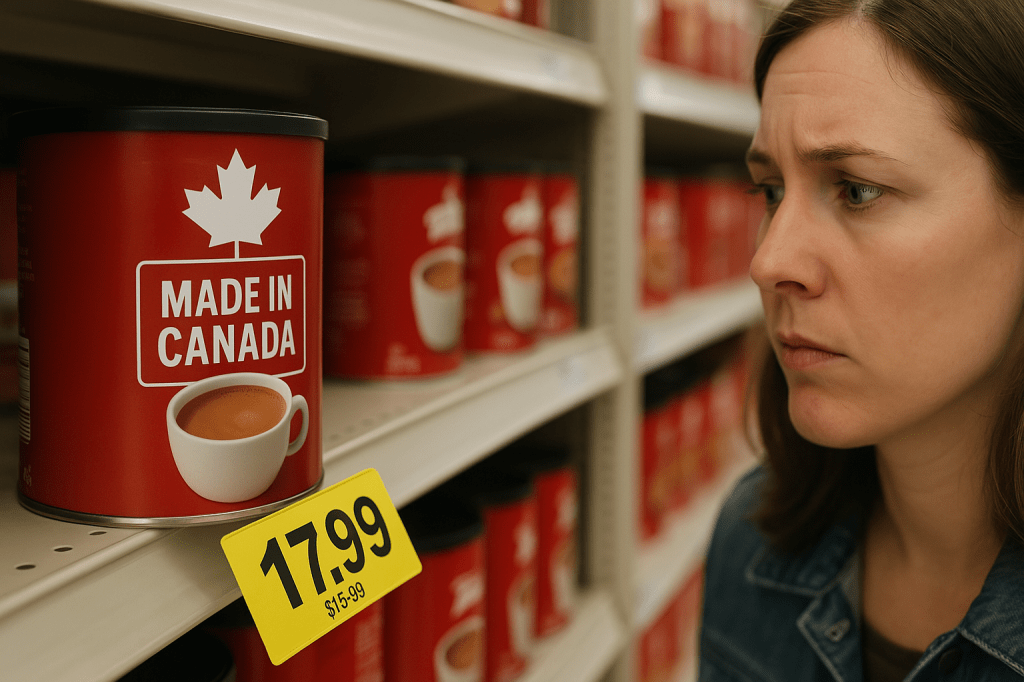
在爱国标签的光环下,越来越多的消费者开始发现,一些本土品牌正在悄悄涨价。一杯热巧克力粉、几颗咖啡胶囊,价格虽涨幅不大,却引发了广泛讨论:“支持加拿大制造,是否就意味着要多掏腰包?”

枫叶标签,不再只是情感象征?

“本来是为了支持本地经济,但感觉我们被当成了韭菜。”安省密西沙加的市民Lori在接受CBC《Marketplace》采访时如此形容自己最近的购物体验。她习惯性购买Tim Hortons的热巧克力粉,却惊讶地发现,短短一个月内价格从$15.99跳涨到$17.99。

Marketplace调查发现,自“购买加拿大制造”号召发布以来,包括Tim Hortons、Chapman’s、St-Hubert等知名品牌在内的上百种产品,均有不同程度的涨价。

不仅如此,连锁超市Loblaws旗下多个品牌——包括No Frills、Real Canadian Superstore和Zehrs——也同步在价格标签上做出了微调。以热销咖啡产品为例,一款焦糖太妃糖味胶囊在一个月内上涨$0.50,另一款法式卡布奇诺粉则上涨$1.00。

价格上涨,真的是原材料惹的祸?

在尝试寻找合理解释时,不同的专家给出了相左的观点。

圭尔夫大学食品经济学教授Michael von Massow指出,全球气候变化影响了咖啡种植国的产量,加上加元疲软,这些因素的确会推动成本上涨。

但麦克马斯特大学经济学助理教授Colin Mang却持相反意见。他指出,2月开始,可可豆等原材料价格反而开始下降,运输成本和工资也并无大幅波动。

“更可能的解释是,企业意识到——消费者愿意为爱国标签付费。”他说。

换言之,“枫叶标签”可能正在被某些品牌作为营销利器,通过“情感消费”转化为“溢价策略”。

公众反应:热情渐冷,疑虑升温

在Reddit、Facebook等社交平台上,“国货涨价”成为讨论焦点。一些网友调侃:“我们不是在买枫叶,是在用钱包投票。”另一位用户留言:“如果支持本地就要付双倍价格,我宁愿支持理性消费。”

有消费者甚至开始“反向筛选”,刻意避开枫叶标签以寻找性价比更高的进口商品。“说实话,有些所谓加拿大制造,原材料还是从海外运来的,只是包装在这儿做的。”温哥华的年轻主妇Jasmine表示。

谁来监管“爱国溢价”?

目前,加拿大政府尚未对本土商品涨价进行系统性监管或调查。消费者事务机构仅表示将“密切关注市场趋势”,鼓励消费者在购物时“做出知情选择”。

但一些议员和消费维权组织已开始呼吁设立“国货溢价指数”监测机制。加拿大消费者联盟发言人表示,“如果我们提倡加拿大制造,就必须确保它不是一种心理勒索。”

从“支持”到“反思”:枫叶经济的下一步是什么?

一场本应唤起国家认同感的运动,正在无意中挑战民众的耐心和信任。

“我爱加拿大,也愿意为本地经济出一份力。”来自渥太华的高中老师Megan在采访最后说,“但当‘爱国’变成‘被收割’,那份支持就不再纯粹。”

或许,加拿大制造真正需要的,并不是情绪上的标签,而是质量、透明度与价格合理性的同步提升。只有这样,“枫叶”才能真正成为值得骄傲的象征,而非让消费者“钱包出血”的借口。

#加拿大家园论坛