本次研究由澳大利亚雪梨大学(University of Sydney)公共卫生学院教授伊曼纽尔·史塔玛塔奇斯(Emmanuel Stamatakis)领导,团队分析了英国生物银行(UK Biobank)超过2万名成年人的行为数据,追踪他们为期七天的生活动线。与过去许多依赖问卷调查的研究不同,这项研究采用高精准度的活动追踪器,为参与者绘制出日常动作的“行为地图”。
Amid ongoing global market turmoil and a resurgent U.S. trade war, the Canadian economy is teetering on the edge of a new recession. With a staggering 33,000 jobs lost nationwide in March alone—and up to 500,000 workers in Ontario potentially at risk—former TD Bank Chief Economist Don Drummond has sounded the alarm: an unprecedented employment storm may be underway.
Shocking Numbers: 33,000 Jobs Lost in March, Ontario at the Epicenter
According to Statistics Canada, the country shed 33,000 jobs in March 2025—the largest monthly drop since the pandemic. February had already shown signs of stagnation, with no significant employment growth. The message is clear: economic momentum is stalling.
“This isn’t just about cold statistics—it’s a warning signal that a recession is approaching,” said Drummond in an interview with CTV News. He pointed out that the manufacturing and auto sectors were the hardest hit—sectors central to Ontario’s economy. “If this downturn continues, Ontario alone could see half a million jobs disappear.”
Multiple Shocks: Global Slowdown + Trade War Escalation = Canada Under Pressure
Canada is being squeezed from all sides—not just by domestic high interest rates and weak investment, but by mounting external pressure, especially from its largest trading partner: the United States.
In early April, former U.S. President Donald Trump returned to the political scene with a bang, announcing a 25% tariff on all imported vehicles and a 10% general tariff on non-CUSMA imports.
“We are at the epicenter of a geoeconomic earthquake,” said Drummond. He emphasized that even countries like Vietnam and Australia—which don’t have large trade imbalances with the U.S.—are now suffering the ripple effects of aggressive American tariffs.
Auto Sector Takes a Hit: Stellantis Plant Shuts Down, Thousands Left in Limbo
The consequences have been immediate. Stellantis, a major auto manufacturer, announced it will halt operations at its Windsor Assembly Plant for two weeks, leaving thousands of workers in employment limbo. Earlier, the company also paused its next-generation electric Jeep Compass production line in Brampton to “reevaluate its product strategy.”
“We’re not waiting for the storm to hit—we’re already in it,” said a shop floor supervisor who requested anonymity. “Even the job postings have been pulled. Everyone’s worried the next announcement will be layoffs.”
Ontario’s Response: Premier Ford Announces $11B Emergency Relief Package
In response to the unfolding crisis, the Ontario government has launched an $11 billion relief plan to cushion the blow. The measures include a six-month deferral on certain administrative taxes, and an expanded rebate through the Workplace Safety and Insurance Board (WSIB)—doubling the previous $2 billion rebate issued in March.
“We can’t control President Trump, but we can control the future we want to build for Ontario,” said Premier Doug Ford during a visit to Orillia. He emphasized his administration’s commitment to protecting auto workers and pledged to break down interprovincial trade barriers, diversify exports, and build a more resilient economy.
The province also announced tax relief measures across ten categories, including the Employer Health Tax, Gasoline and Fuel Taxes, Tobacco Tax, and Horse Racing Levy.
Federal Government Hits Back: Canada Slaps Retaliatory Tariffs on U.S. Cars
The federal government is not standing idly by. Prime Minister Mark Carney announced retaliatory tariffs on all American-made vehicles that do not meet CUSMA standards. Even vehicles that technically qualify under the agreement will be taxed if they contain any non-Canadian components.
“These tariffs are unjustified, unfounded, and flat-out wrong,” said Carney, warning that Trump’s protectionist trade crusade could “destabilize” the global economy. He criticized the U.S. for adopting a confrontational approach that he said is driving up inflation and choking global growth.
The Political Underpinning: Is This a Campaign Playbook for 2025?
The timing of this economic storm is no coincidence—it comes just as the U.S. enters its 2025 election cycle. Some analysts believe Trump’s renewed tariffs are part of a strategy to shore up support in the Rust Belt by portraying foreign competition—particularly from Canada—as a threat to American jobs.
“This is a geopolitical and economic chess game. Canada must escape its overreliance on the U.S.,” said Professor Linda Zhao, an economist at the University of Toronto. She urged Canada to accelerate trade deals with ASEAN, South America, and other emerging markets. “Only by stepping out of the U.S.-centric trade framework can Canada reclaim true economic sovereignty.”
Conclusion: The Storm Isn’t Over, But It Could Be an Opportunity for Reinvention
Canada is facing a rare economic shock—one that goes beyond temporary layoffs and hints at a fundamental shift in global trade dynamics. Yet within every crisis lies the seed of reinvention.
“If we use this moment to pivot toward green supply chains, trade diversification, and workforce upskilling, Canada could emerge stronger a decade from now,” said Drummond.
The storm may be raging, but panic isn’t the answer. Clarity, resilience, and foresight will decide who we become when the clouds finally lift.
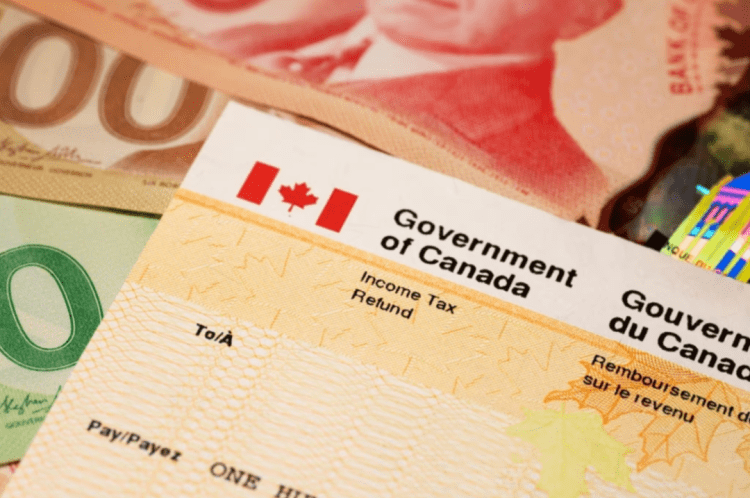
As Canada enters the final stretch of the tax season in mid-April, a widely discussed tax report has been released, revealing that hundreds of thousands of Canadians are unknowingly missing out on tax rebates and benefits. On average, each individual loses $3,000 annually, with a total of $3 billion being “given away” to the government each year.
This enormous “lost wealth” is largely attributed to the public’s general lack of understanding of tax policies, the complex design of the tax system, and the exclusion of certain social groups due to language and cultural barriers. While many people still have time to “reclaim” the money that rightfully belongs to them, they must first realize that these benefits are a right, not a favor.
Blind Spot 1: 65% of Canadians Don’t Know Tax Forms Can Be “Amended”
According to a national survey conducted by H&R Block this month, 65% of Canadians were unaware that they could amend their personal income tax returns for the past 10 years to claim missed deductions, tax credits, or benefits that they were entitled to but did not previously claim.
“The most shocking finding in our survey wasn’t what people missed; it was that they didn’t know they could make amendments,” said Yannick Lemay, a senior tax expert at H&R Block. “Many people still believe that once the tax filing deadline has passed, they can no longer make changes, which is completely wrong.”
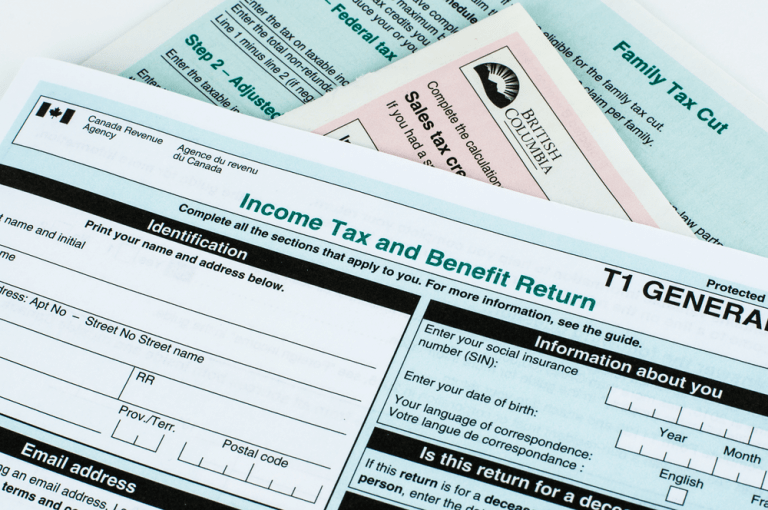
According to the Canada Revenue Agency (CRA), individual taxpayers can use the T1 Adjustment Request (T1-ADJ) form to correct tax returns from up to 10 years ago, especially for missed tax credits, medical expenses, education costs, or family care expenditures.
Blind Spot 2: 72% of People “Don’t Bother to Amend” – Is It the Complexity of the System or Information Gap?
The report also highlighted that while some people are aware they can amend their tax returns, 72% of respondents stated they believed that amending old tax returns was “too much trouble,” and therefore chose to forgo potential benefits and rebates.
This has sparked further criticism of the CRA’s service system from both academics and tax professionals.
“It’s not just an issue of ‘not knowing,’ but a lack of trust in the entire tax system,” said Elena Jiang, an associate professor of public policy at UBC. “The government’s intention behind these tax credits was ‘social redistribution,’ but in reality, they have become opportunities that only the ‘information elite’ know how to take advantage of.”
According to Jiang, information gaps, tax burdens, and language and cultural barriers are key factors preventing low-income groups, immigrants, and younger people from claiming these benefits.
“You first have to know that the benefit exists, then know that you qualify, then know how to fill it out, and you also need to know that you can amend it… It’s a system with a very high information threshold,” she said.
Real-World Impact: Losing $3,000 – “This Could Have Helped Me Pay My Credit Card Bill Last Month”
“I was shocked,” said Lily Wang, a full-time mom from Toronto, in an interview. “I always thought the student loan interest credit was just a small number, but I had no idea that I could claim the interest I paid over the past five years, and even get a refund of a few hundred dollars.”
Wang had used H&R Block’s Second Look service at the recommendation of a friend and discovered that she could claim multiple expenses, including after-school psychological counseling and orthodontic treatment for her children, under medical expense tax credits (METC).
“I used to think filing taxes was just filling out software, and maybe I’d get a few hundred dollars back in GST/HST refunds. Now I realize, we’ve been ‘automatically waiving our rights’ this whole time,” she said.
Experts’ Overview: Top 10 Most Commonly Missed Tax Benefits in Canada – How Many Have You Missed?
H&R Block has compiled a list of the top 10 most commonly overlooked tax credits and deductions, many of which can be claimed retroactively through CRA amendments:
Benefit
Description
Amount Refundable/Claimable
Childcare Expenses Credit
Up to $8,000 for children under 7
Up to $8,000 per child
Canada Workers Benefit (CWB)
Tax credit for low-income workers
$1,590 for single, $2,739 for families
Student Loan Interest Credit
Claim interest paid on student loans for the past 5 years
Based on actual interest paid
Medical Expense Tax Credit (METC)
Dental, orthodontic, mental health costs, etc.
No limit, 15% of eligible expenses
Moving Expenses Deduction
Moving 40+ km for work or study
Includes temporary accommodation, real estate fees, etc.
Home Accessibility Tax Credit (HATC)
Modifications for seniors or people with disabilities
Up to $3,000
Disability Tax Credit (DTC)
Applies to conditions like ADHD, diabetes, etc.
Up to $9,872, depending on the case
Tuition Tax Credit
Transferable or cumulative indefinitely
Up to $5,000 per year transferable
First-Time Homebuyers’ Tax Credit (HBTC)
Tax rebate for first-time homebuyers
Up to $1,500
Caregiver Credit (CCC)
For those caring for elderly or disabled family members
Up to $8,375
It’s important to note that many people mistakenly believe they don’t qualify for credits like the CWB or DTC because they “don’t earn enough.” However, these credits are not limited to low-income individuals.
“The most common misunderstanding we encounter is: ‘I don’t receive government benefits, so these credits don’t apply to me,’” Lemay explained. “In reality, as long as you have a job, children, family members, or loans, you may qualify for these credits.”
Language and Class Barriers: Information Inequality Creates “Financial Inequality”
An elderly immigrant from the Greater Vancouver area shared, “We used to rely on our son’s friend to help us with the tax filing, and no one ever told me that these credits were available.”
In her view, language barriers, lack of professional knowledge, and even a lack of trust in the government system have led many immigrant families to miss out on the support resources that rightfully belong to them.
Data shows that new immigrants and non-native English speakers are significantly more likely to make errors, omissions, or miss out on benefits compared to the general population.
“This isn’t about laziness; it’s that the system doesn’t take them into account,” said Professor Elena Jiang. “A truly fair tax system cannot only benefit the ‘information elite.’”
Still Time to Reclaim Missed Benefits: How to Apply for Retroactive Refunds
The CRA currently allows individuals to apply for retroactive credits or refunds using the following steps:
Log into your CRA account and download/fill out the T1-ADJ form
Specify the years and credits you wish to amend
Attach supporting documents (e.g., receipts, medical bills, loan interest details)
Choose to submit by mail or electronically
Wait for CRA’s processing (typically several weeks to months)
Many tax services (such as H&R Block and TurboTax) also offer “historical review” services to help users reclaim misreported items from previous years.
Conclusion: The Government Won’t Tell You What You’re Entitled To
“You’re not missing out on benefits, you’re missing out on opportunities—the portion of your earnings that should rightfully be yours,” commented one Twitter user.
In the current climate of high inflation, rising living costs, and high interest rates in Canada, every refundable dollar is like “lifesaving water” for household finances.
If we’ve missed out in the past due to ignorance, negligence, or lack of time, it may be time to reassess our relationship with “taxes.” They’re not just cold government forms—they’re maps that hold the potential to unlock your wealth.
OTTAWA — Mark Carney knew the comparison was inevitable. On stage at Canada’s first televised federal leaders’ debate, the former central banker-turned-political leader faced a direct attack from Conservative leader Pierre Poilievre: “Mr. Carney, your party has been in power for 10 years. You are like Trudeau. We need change.”
Carney responded swiftly, “You’re not Trudeau. I’m not Trudeau.” It was a calculated departure from the legacy of Prime Minister Justin Trudeau, under whom Carney once served as an informal economic adviser. Now, as leader of a Liberal Party seeking a fourth consecutive term, Carney must convince voters he represents continuity in experience—but a break from leadership fatigue.
A Technocrat’s Gamble
Mr. Carney, 59, comes to the campaign with a résumé few in Canadian politics can match. A former governor of both the Bank of Canada and the Bank of England, he has also served as UN Special Envoy on Climate Action and Finance. His entry into politics was long anticipated, but his timing presents both opportunities and constraints.
Facing a resurgent Conservative Party under Mr. Poilievre, who has capitalized on cost-of-living pressures and a growing skepticism toward federal institutions, Mr. Carney’s brand of calm technocratic leadership is being positioned as a stabilizing force amid rising global volatility.
But the perception that he is a policy architect behind the Liberal Party’s record—marked by ballooning deficits, high immigration targets, and an underperforming housing market—poses political risks.
“Carney represents a very different tone and policy orientation than Trudeau,” said Jennifer Welsh, a political science professor at McGill University. “But it’s not yet clear that voters will distinguish him from the broader Liberal record.”
A Decade in Power, and the Weight That Comes With It
Since 2015, the Liberal Party has overseen expansive social spending programs, a carbon pricing regime, and a foreign policy often aligned with multilateralism. The government also weathered a global pandemic and subsequent inflationary surge, both of which have tested its credibility with middle-class voters.
Public support has eroded in recent years. According to an Ipsos poll conducted earlier this month, 47% of respondents said it is time for a new party to govern, while only 28% expressed confidence in the Liberals’ ability to manage the economy.
In response, Mr. Carney has unveiled a platform focusing on what he calls “pragmatic growth”—a mix of green energy investment, targeted tax reform, and aggressive housing supply measures aimed at restoring affordability.
“I am not running on the past. I am running to build a resilient future,” Carney said during the debate, seeking to underline his economic credentials without defending every decision of the Trudeau years.
Conservatives Lean Into “Change” Message
Mr. Poilievre, for his part, has leaned heavily into the “time for change” narrative. In the debate, he attacked the Liberals on inflation, immigration policy, and public debt—topics where Carney’s prior roles make him both highly knowledgeable and politically vulnerable.
“Poilievre is betting that Carney can’t escape the Liberal shadow,” said Darrell Bricker, CEO of Ipsos Public Affairs. “Whether that’s fair or not is beside the point. What matters is whether voters believe in the distinction.”
Still, Mr. Carney’s “I’m not Trudeau” remark may prove pivotal. For some Liberal voters wary of a fourth Trudeau term but hesitant to back Poilievre, it offers a psychological off-ramp—an option to stay the course, with new leadership.
Markets Watching Closely
Bay Street and international investors are closely monitoring Carney’s performance. His global economic reputation lends credibility, especially in the eyes of institutional players concerned with Canada’s fiscal discipline and regulatory stability. But political capital, like market confidence, is easy to lose and hard to earn back.
The next leaders’ debate is expected in two weeks, where economic policy is again set to dominate. Until then, Mr. Carney’s balancing act—between insider and reformer, continuity and change—remains the defining tension of a high-stakes campaign.


























 加拿大家园论坛